Mérida Travel Guide 2026: Historic Center, Mayan Culture, Food & Day Trips
EASY WAY CAR RENTAL | GUIDES
Mérida Travel Guide 2026: Historic Center, Mayan Culture, Food & Day Trips
Discover the best things to do in Mérida, Yucatán: colonial architecture, living Maya heritage, authentic Yucatecan cuisine, colorful neighborhoods, traditional markets, and unforgettable excursions.
Updated November 12, 2026 | Category: Guides
Welcome to Mérida, the capital of Yucatán and one of southeastern Mexico's most fascinating cultural destinations.
While Cancun and the Riviera Maya attract international visitors with their Caribbean beaches, Mérida offers a different perspective on the Yucatán Peninsula: historic streets, centuries-old architecture, traditional markets, regional cuisine, and a vibrant Maya cultural identity.
This is a city where visitors can admire historic mansions in the morning, discover local food traditions at lunchtime, explore museums in the afternoon, and enjoy the atmosphere of a lively public square in the evening.
Mérida is also an excellent starting point for exploring other parts of Yucatán.
Archaeological sites such as Uxmal and Dzibilchaltún, Gulf Coast destinations such as Progreso, and towns such as Izamal offer opportunities for memorable day trips.
Whether you are visiting Mérida for the first time, planning a family vacation, or organizing a longer Mexico road trip, this comprehensive Mérida travel guide will help you understand the city's history, attractions, culture, and practical travel considerations.
Mérida combines a walkable historic core, distinctive Yucatecan gastronomy, living Maya traditions, museums, architectural landmarks, and convenient access to regional excursions. It is an appealing destination for travelers who want to experience more than Mexico's famous beach resorts.
1. Why Mérida Should Be on Your Mexico Travel Itinerary in 2026
Mérida is an ideal destination for travelers interested in history, architecture, gastronomy, and the cultural identity of Mexico.
Unlike a vacation centered exclusively on beach activities, a visit to Mérida offers opportunities to understand the historical and cultural traditions of the Yucatán Peninsula.
A City of History and Culture
The city's historic center contains important colonial-era buildings, churches, public squares, and architectural landmarks.
Many historic properties now accommodate museums, galleries, cafés, restaurants, and cultural spaces.
A Gateway to Maya Heritage
Mérida provides a useful base for visiting archaeological sites and learning about Maya history.
However, Maya culture should not be understood only through ancient ruins.
Maya communities, languages, craft traditions, foodways, and contemporary cultural practices remain an essential part of Yucatán today.
A Destination for Food Lovers
Yucatecan cuisine is one of the region's most distinctive attractions.
Traditional dishes reflect local ingredients, culinary techniques, and generations of cultural exchange.
Travelers can discover regional flavors in markets, neighborhood eateries, and restaurants throughout the city.
Excellent Regional Excursions
Mérida's location makes it convenient to organize visits to archaeological sites, Gulf Coast communities, cenotes, and nearby towns.
Travelers should consider distances, road conditions, opening hours, and weather before departure.
History
Colonial landmarks, museums, and archaeological heritage.
Culture
Living Maya traditions, arts, and local communities.
Gastronomy
Traditional markets and distinctive regional cuisine.
Day Trips
Archaeological sites, beaches, towns, and natural attractions.
2. Where Is Mérida, Mexico, and How Can You Get There?
Mérida is located in the northwestern part of the Yucatán Peninsula and serves as the capital of the Mexican state of Yucatán.
Its location makes it an important urban center and a useful base for discovering the surrounding region.
Arriving by Air
Mérida is served by Manuel Crescencio Rejón International Airport.
Travelers should confirm available flight routes, airline schedules, and airport transportation options before booking.
Traveling from Cancun
Visitors already staying in Cancun may consider traveling to Mérida as part of a longer Yucatán Peninsula trip.
The cities are connected by major regional roads, including a toll-road corridor with access restrictions and applicable charges.
Driving times vary according to the chosen route, traffic, weather, road conditions, and stops.
Traveling from Playa del Carmen or Tulum
Travelers based in the Riviera Maya can also plan a journey to Mérida.
Because these are substantial regional journeys, consider whether an overnight stay is more appropriate than attempting a rushed round trip.
Transportation Options
Visitors may compare several options depending on their travel preferences:
- Scheduled intercity bus services.
- Local public transportation.
- Authorized taxi services.
- Private transportation.
- Rental vehicles.
Getting Around Mérida
The official Yucatán tourism portal identifies the Va-y-Ven public transportation network and IE-TRAM among the region's mobility options.
These services may be useful for certain urban journeys, while travelers planning several regional excursions may prefer to compare rental transportation.
Compare the complete cost, convenience, luggage requirements, accessibility, and travel time of each option. If renting a car, verify the provider's current conditions and permitted routes.
3. The History of Mérida: From the Maya City of T'Hó to Modern Yucatán
Understanding Mérida's history adds depth to almost every sightseeing experience in the city.
The modern city developed on the site of the ancient Maya settlement known as T'Hó.
The area was part of a much older cultural landscape before the arrival of Spanish colonial forces.
The Maya Heritage of T'Hó
T'Hó existed long before the colonial foundation of Mérida.
Its history forms part of the broader development of Maya civilization across the peninsula.
Maya history includes sophisticated architectural traditions, regional political systems, agricultural knowledge, writing, mathematics, and astronomical observation.
The Colonial Foundation
The Spanish colonial city of Mérida was founded in 1542.
Its name references Mérida in Extremadura, Spain.
During the colonial period, buildings and public spaces were established over the earlier Maya urban landscape.
INAH documents how stone from pre-Hispanic structures was reused in colonial construction, including important civic and religious buildings.
Understanding the City's Layered History
Mérida's architecture reflects a complex history involving colonization, Indigenous resistance, religious transformation, economic development, and cultural continuity.
Visitors should recognize that the city's colonial monuments represent only part of its history.
Contemporary Maya communities continue to shape the region's language, identity, and traditions.
The Henequen Era
During the nineteenth and early twentieth centuries, the production and export of henequen fiber contributed to major economic and urban changes in Yucatán.
Wealth associated with this industry influenced the construction of prominent residences and the development of areas such as Paseo de Montejo.
This history also involved deep social inequalities and difficult labor conditions, which are important to acknowledge when interpreting the region's past.
Visit museums and historic landmarks with an interest in both Maya history and the complex colonial and modern development of Yucatán.
Official reference: INAH — Historic Monuments Zone of Mérida .
4. Exploring Mérida's Historic Center: The Best Place to Begin
Mérida's Historic Center is one of the most rewarding areas for first-time visitors.
Its streets contain important architectural landmarks, public squares, museums, restaurants, and traditional businesses.
Exploring on foot allows visitors to appreciate details that might otherwise be missed when traveling directly between attractions.
Start Near Plaza Grande
Plaza Grande provides a useful orientation point for exploring the surrounding historic district.
Several of the city's most recognizable landmarks are located around the square.
Discover Historic Streets
The city center features a street grid with historic buildings, courtyards, churches, and commercial spaces.
Walking through the area offers opportunities to observe architecture from different historical periods.
Explore at a Comfortable Pace
Mérida can experience intense heat and humidity.
Plan water breaks, seek shade, and avoid excessive outdoor exertion during very hot conditions.
Free Municipal Walking Tours
The Ayuntamiento de Mérida publishes information about free guided tours of the Historic Center.
The municipal listing consulted for this guide describes a morning tour from Monday through Saturday at 9:30 a.m., with advance registration at the tourist information module.
The published tour has a participant limit, and schedules or meeting points may change.
Confirm current details directly with the municipality before attending.
Suggested Historic Center Walking Route
- Begin at Plaza Grande.
- Admire Mérida Cathedral.
- Explore the exterior of Casa de Montejo.
- Learn about the Government Palace.
- Walk through nearby historic streets.
- Discover cafés, markets, and cultural spaces.
- Finish with a traditional Yucatecan meal.
Municipal reference: Mérida Historic Center Walking Tour .
5. Plaza Grande: The Cultural and Historical Heart of Mérida
Plaza Grande is one of the most important public spaces in Mérida.
Located in the Historic Center, the square is surrounded by major civic and religious landmarks.
It serves as a gathering place for residents and visitors and offers an introduction to the city's architecture and everyday urban life.
What Can You See Around Plaza Grande?
Important surrounding landmarks include:
- Catedral de San Ildefonso.
- Palacio de Gobierno.
- Palacio Municipal.
- Casa de Montejo.
Architecture and Photography
The square offers opportunities to photograph historic façades, public spaces, and architectural details.
Be respectful of religious services, government operations, and any photography restrictions inside buildings.
Local Atmosphere
Plaza Grande is also a place to observe daily life, relax beneath trees, and discover nearby traditional food vendors.
Cultural activities may take place in the surrounding area, but specific events and schedules should be verified with the municipal tourism office.
Best Way to Visit
Allow enough time to explore the square and nearby attractions without rushing.
The historic center is best appreciated as a connected cultural district rather than a collection of isolated landmarks.
6. Mérida Cathedral: History, Architecture, and Cultural Significance
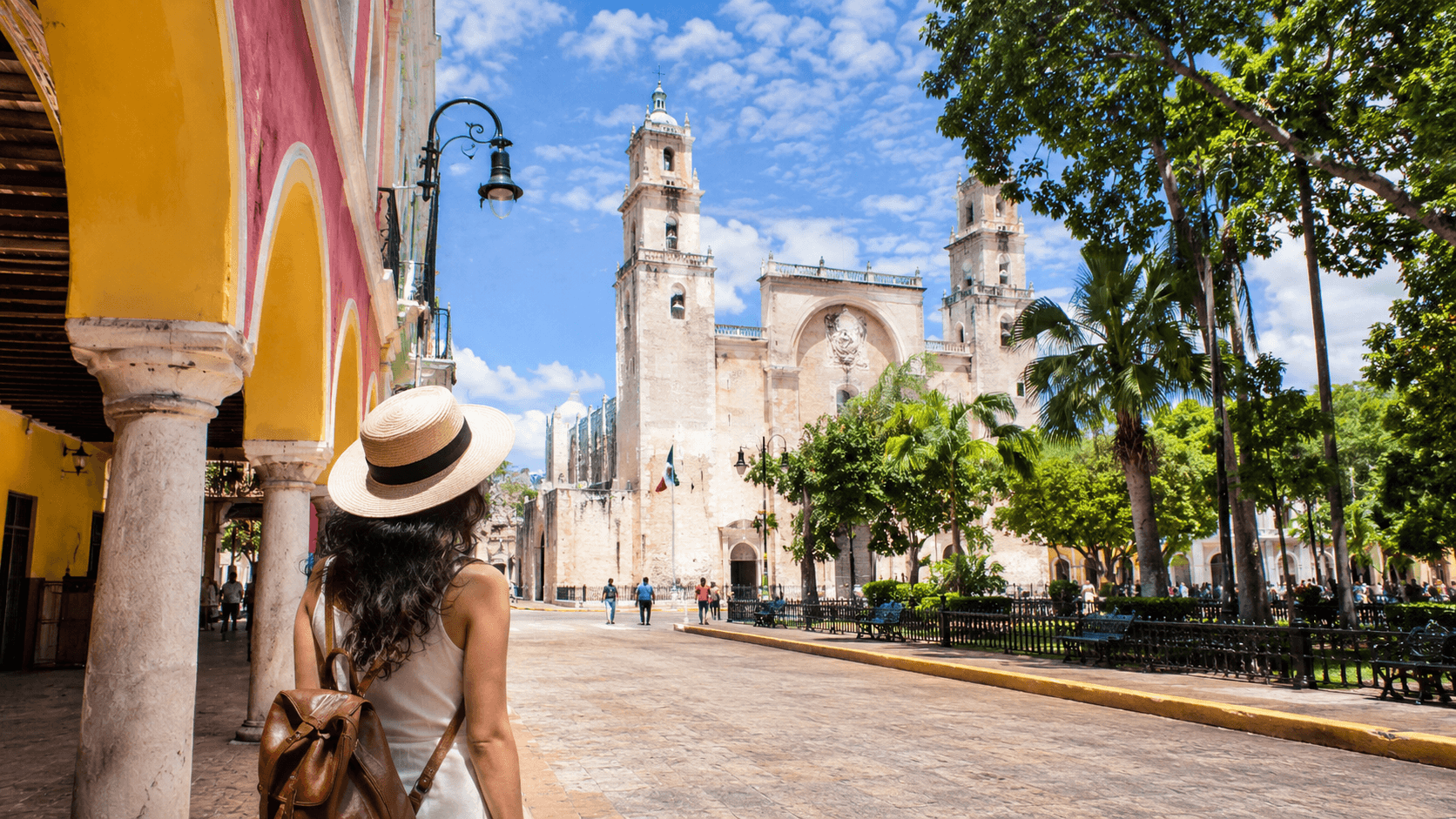
The Catedral de San Ildefonso is one of Mérida's most recognizable landmarks.
Located beside Plaza Grande, the cathedral occupies an important place in the city's religious and architectural history.
A Landmark of Colonial Mérida
Construction of the cathedral took place during the sixteenth century.
It is recognized as one of the earliest major cathedrals built on the American mainland.
Its exterior and interior reflect important elements of colonial religious architecture.
The Relationship with Ancient T'Hó
The cathedral's history is closely connected to the transformation of the earlier Maya city.
Historical accounts document the reuse of stone from pre-Hispanic structures during colonial construction.
This connection makes the cathedral an important place for understanding the complex history of Mérida's urban landscape.
Visiting Respectfully
The cathedral remains an active religious space.
Visitors should respect services, ceremonies, dress expectations, and photography restrictions.
Access may vary according to religious activities and maintenance.
Combine Your Visit
A cathedral visit can be combined with Plaza Grande, Casa de Montejo, and the Government Palace.
Treat the cathedral as both a historic monument and an active place of worship. Confirm access before visiting, especially during major religious events.
7. Casa de Montejo and the Government Palace: Discovering Mérida's Colonial Heritage
Two important landmarks near Plaza Grande are Casa de Montejo and the Government Palace.
Together, they help visitors explore different aspects of the city's colonial and regional history.
Casa de Montejo
Casa de Montejo is a historic building associated with the Montejo family and the early colonial period.
Its façade is a notable example of colonial architecture and reflects the political and social structures of the era.
Visitors interested in architecture and history should take time to observe its decorative details.
The Government Palace
The Palacio de Gobierno is another major landmark in Mérida's historic center.
According to the official Yucatán tourism portal, its interior includes 27 murals by Yucatecan artist Fernando Castro Pacheco.
The works explore important episodes of Yucatán's history.
Art as Historical Interpretation
The murals provide an opportunity to reflect on Indigenous history, colonialism, regional identity, and social transformation.
Artistic representations should be understood as interpretations of historical events, not substitutes for historical research.
Planning Your Visit
Government buildings and cultural institutions may have access restrictions, special events, or changing schedules.
Confirm visitor access before planning your day.
8. Paseo de Montejo: Mérida's Most Famous Avenue and Historic Mansions
Paseo de Montejo is one of Mérida's most iconic avenues.
Inspired by European-style boulevards, it developed during a period of major economic and architectural transformation in Yucatán.
Today, the avenue is known for its historic mansions, museums, cultural institutions, restaurants, and cafés.
The Architecture of Paseo de Montejo
Many prominent residences along the avenue reflect architectural styles popular during the nineteenth and early twentieth centuries.
These buildings offer insight into the wealth and social history associated with the henequen industry.
Quinta Montes Molina
Quinta Montes Molina is one of the historic residences associated with Paseo de Montejo.
Visitors interested in historic interiors and architecture may wish to investigate its current visitor options.
Palacio Cantón
Palacio Cantón is an important architectural landmark and the home of the Museo Regional de Antropología.
It offers an opportunity to connect the city's historic architecture with the study of regional archaeology and cultural heritage.
Walking Along the Avenue
A stroll along Paseo de Montejo can be an enjoyable way to appreciate the city's architecture and atmosphere.
Consider the weather, walking distances, traffic crossings, and your preferred pace.
Municipal Guided Tours
The Ayuntamiento de Mérida publishes a free guided Paseo de Montejo tour.
The municipal information consulted for this guide lists an evening departure at 6:30 p.m. from Monday through Saturday.
The tour has registration requirements and a participant limit. It does not include visits inside the mansions.
Confirm the current schedule and availability before attending.
Paseo de Montejo Highlights
- Historic mansions and façades.
- Palacio Cantón.
- Quinta Montes Molina.
- Cultural venues and galleries.
- Cafés and restaurants.
- Monumento a la Patria.
Official reference: Municipal Paseo de Montejo Tour .
9. Monumento a la Patria: One of Mérida's Most Recognizable Landmarks
The Monumento a la Patria is an important cultural and architectural landmark located along Paseo de Montejo.
Its sculptural elements represent themes from Mexican history and identity.
A Monument Rich in Symbolism
The monument contains numerous carved details that reference different historical periods.
Its imagery provides an opportunity to explore how national history has been represented through public art.
A Popular Photography Location
The monument is frequently photographed by visitors.
However, it is located within an active urban traffic environment.
Use designated pedestrian areas and crossings. Never enter traffic lanes to take photographs.
Combine It with Paseo de Montejo
A visit can form part of a broader architectural walk along the avenue.
Travelers may also combine the area with nearby cultural or gastronomic attractions.
Stay in designated pedestrian areas and respect traffic signals when photographing the monument.
10. Santa Lucía, Santa Ana, and Mérida's Traditional Neighborhoods
Beyond the main monuments, Mérida's traditional neighborhoods offer opportunities to discover the city's local atmosphere.
Historic squares, churches, restaurants, and neighborhood streets reveal different aspects of everyday life.
Santa Lucía
Santa Lucía is known for its attractive square and surrounding historic urban environment.
Visitors may enjoy walking through the area, observing architecture, and discovering nearby dining establishments.
Cultural programming may take place at different times, but schedules should be checked before visiting.
Santa Ana
Santa Ana is another traditional area worth considering during a walking tour.
Its neighborhood setting connects historic Mérida with the northern part of the central district.
Santiago
Santiago is associated with neighborhood traditions and local urban life.
Exploring this area can provide a different perspective from the main tourist landmarks.
La Mejorada
La Mejorada is another historic neighborhood with architectural and cultural interest.
Visitors can include it in a broader exploration of central Mérida.
Respecting Residential Areas
Many historic neighborhoods are also places where people live and work.
Respect private property, avoid blocking entrances, and keep noise levels appropriate.
| Neighborhood | Main Appeal | Suggested Experience |
|---|---|---|
| Santa Lucía | Historic square and dining | Relaxed cultural walk |
| Santa Ana | Traditional neighborhood | Architecture and local atmosphere |
| Santiago | Neighborhood traditions | Explore streets and local food |
| La Mejorada | Historic urban landscape | Discover architectural landmarks |
11. Maya Culture in Mérida: Living Traditions, Language, and Identity
One of the most important aspects of visiting Mérida is understanding the continuing presence of Maya culture.
Maya heritage is not limited to archaeological monuments or ancient history.
Maya people and communities continue to contribute to the region's cultural, social, and linguistic life.
The Yucatec Maya Language
Yucatec Maya, often referred to locally as Maya, remains an important Indigenous language in the peninsula.
Visitors may encounter Maya place names, expressions, and cultural references throughout the region.
Learning about local language and identity can enrich the experience of traveling through Yucatán.
Traditional Crafts
Regional crafts may include textiles, embroidery, woodwork, and other forms of artistic production.
When purchasing crafts, consider buying directly from artisans or reputable sellers who provide transparent information about the work.
Traditional Clothing
Clothing associated with Yucatecan identity, including embroidered garments and regional dress traditions, forms part of the peninsula's cultural heritage.
These traditions should be approached with respect for their social meaning and contemporary use.
Maya Knowledge and Food Traditions
Agricultural practices, local ingredients, and food preparation techniques reflect longstanding regional knowledge.
Contemporary Yucatecan cuisine also incorporates influences from different historical periods and communities.
Responsible Cultural Tourism
Avoid treating living communities as tourist performances.
Request permission before photographing people, respect local customs, and support community-led cultural experiences when available.
Maya culture is a living culture. Approach community experiences with curiosity, respect, and recognition of contemporary Maya identity.
12. Best Traditional Yucatecan Foods to Try in Mérida
Mérida is an excellent destination for travelers who want to explore regional Mexican cuisine.
Yucatecan food traditions combine local ingredients, historical culinary techniques, and cultural influences that developed over centuries.
The following dishes are among the regional specialties worth discovering.
Cochinita Pibil
Cochinita pibil is a traditional pork preparation associated with Yucatán.
It is commonly seasoned with achiote and citrus and prepared using slow-cooking techniques.
It may be served in tacos, tortas, or other presentations.
Panuchos
Panuchos are a popular Yucatecan dish made with tortillas that are typically filled with beans, fried, and topped with various ingredients.
Toppings vary by vendor and preparation.
Salbutes
Salbutes are another regional specialty based on fried tortillas with toppings.
They differ from panuchos in their traditional preparation and texture.
Sopa de Lima
Sopa de lima is a well-known Yucatecan soup featuring the distinctive flavor of local citrus.
Recipes and ingredients can vary between restaurants and households.
Papadzules
Papadzules are a traditional dish often prepared with tortillas, egg, and a sauce made from pumpkin seeds.
They offer a distinctive example of the region's culinary heritage.
Poc Chuc
Poc chuc is associated with grilled pork and regional seasonings.
It is commonly served with accompaniments that complement its citrus flavors.
Relleno Negro
Relleno negro is a traditional dish known for its dark seasoning preparation.
Its flavor profile reflects distinctive regional culinary practices.
Marquesitas
Marquesitas are a popular sweet street-food treat in Yucatán.
They are made from a thin, crisp rolled wafer with fillings that can include cheese and sweet ingredients.
| Dish | Typical Characteristics | Category |
|---|---|---|
| Cochinita pibil | Achiote-seasoned slow-cooked pork | Main dish |
| Panuchos | Bean-filled fried tortillas with toppings | Traditional snack or meal |
| Salbutes | Soft, fried tortillas with toppings | Traditional snack or meal |
| Sopa de lima | Citrus-flavored regional soup | Soup |
| Papadzules | Tortillas with pumpkin-seed sauce | Traditional dish |
| Poc chuc | Grilled pork with regional flavors | Main dish |
| Marquesitas | Crisp rolled wafer with fillings | Dessert or street snack |
Food Allergies and Dietary Requirements
Travelers with allergies or dietary restrictions should confirm ingredients and preparation methods directly with food providers.
Traditional recipes may contain ingredients that are not immediately obvious from the name of the dish.
Explore both traditional eateries and established restaurants. Choose places that follow appropriate food hygiene practices, and ask about ingredients when necessary.
Official reference: Yucatán Tourism — Gastronomic Experiences .
13. Traditional Markets in Mérida: Discover Local Food, Ingredients, and Everyday Life
Traditional markets offer an opportunity to discover Mérida beyond its most famous monuments.
They bring together food vendors, local ingredients, traditional products, and everyday commercial activity.
Mercado Lucas de Gálvez
Mercado Lucas de Gálvez is one of the traditional market areas associated with central Mérida.
Travelers interested in local food culture may find regional ingredients, prepared foods, and market activity.
Individual stalls, products, and operating hours can change.
Mercado San Benito
Mercado San Benito is another important market area in Mérida.
Its commercial environment offers insight into everyday shopping and regional food traditions.
What to Look for in Local Markets
- Regional fruits and vegetables.
- Traditional seasonings and ingredients.
- Prepared Yucatecan foods.
- Local sweets and snacks.
- Handmade products where available.
- Everyday neighborhood commerce.
How to Visit Respectfully
Markets are active places of work.
Respect vendors, avoid obstructing busy walkways, and ask permission before photographing people or their stalls.
Food Safety Considerations
Choose food vendors using appropriate hygiene practices.
Travelers with dietary restrictions should ask about ingredients and food preparation.
Supporting Local Businesses
Purchasing from local vendors can contribute to the local economy.
Consider buying authentic regional products and treating sellers fairly.
Traditional Market Visitor Checklist
- Check current operating hours.
- Carry a suitable payment method.
- Respect vendors and shoppers.
- Ask before taking photographs.
- Follow appropriate food safety precautions.
- Keep personal belongings secure.
- Explore regional ingredients and specialties.
14. Best Museums, Art Galleries, and Cultural Experiences in Mérida
Mérida offers a wide variety of museums and cultural institutions for travelers interested in history, archaeology, art, and regional identity.
Museums are also useful alternatives during very hot afternoons or periods of rainfall.
Museo Regional de Antropología: Palacio Cantón
Located along Paseo de Montejo, Palacio Cantón is a major architectural and cultural landmark.
The building houses the Regional Museum of Anthropology, associated with INAH.
Its exhibitions and visitor arrangements should be confirmed before arrival.
Gran Museo del Mundo Maya
The Gran Museo del Mundo Maya is an important cultural institution dedicated to Maya heritage and related themes.
Visitors interested in regional history and contemporary cultural identity may wish to include it in their itinerary.
Confirm the museum's current exhibitions, admission requirements, and opening hours.
Museums in the Historic Center
The historic center contains cultural spaces associated with art, architecture, and local history.
Temporary exhibitions and institutional schedules may change.
Contemporary Art and Galleries
Mérida also has a contemporary creative scene that includes galleries and independent cultural spaces.
Travelers can explore exhibitions and artistic activities according to current programming.
Cultural Events and Performances
The city hosts various cultural activities throughout the year.
Event schedules, venues, ticketing, and accessibility should be verified with official organizers.
How to Plan a Museum Day
Avoid assuming that every museum opens on the same days or follows identical schedules.
Some cultural institutions may close on particular weekdays or during special events.
| Cultural Experience | Main Interest | Planning Advice |
|---|---|---|
| Palacio Cantón | Anthropology and architecture | Check INAH visitor information |
| Gran Museo del Mundo Maya | Maya heritage | Confirm exhibitions and admission |
| Historic Center galleries | Art and local culture | Review current programming |
| Municipal cultural events | Performances and exhibitions | Consult official event calendars |
Official Cultural Information
The municipal tourism website provides information about attractions and cultural activities.
INAH publishes official information about archaeological and historical heritage.
Useful resources: Visit Mérida MX and INAH .
15. Best Day Trips from Mérida, Yucatán: Discover More Beyond the Historic Center
One of the greatest advantages of visiting Mérida is its location within the Yucatán Peninsula. While the city itself offers historic architecture, museums, traditional markets, and regional cuisine, the surrounding countryside is filled with archaeological sites, natural attractions, coastal communities, and picturesque towns.
For travelers researching the best day trips from Mérida in 2026, the possibilities include world-famous Maya archaeological sites, traditional villages, Gulf of Mexico beaches, cenotes, and restored historic haciendas.
Choosing the right excursion depends on your interests, available time, transportation options, weather conditions, and the amount of walking you are comfortable doing.
Why Mérida Makes an Excellent Travel Base
The official Yucatán tourism portal identifies Mérida as a strategic starting point for exploring destinations such as Uxmal, Chichén Itzá, Progreso, Izamal, and the region's many cenotes.
Travelers can organize their itineraries around different interests instead of visiting unrelated attractions simply because they appear on a popular checklist.
The Main Types of Day Trips
Maya Heritage
Explore Uxmal, Dzibilchaltún, Chichén Itzá, and other archaeological landmarks.
Colonial Towns
Discover Izamal, traditional architecture, historic churches, and local cultural experiences.
Nature and Cenotes
Visit authorized freshwater attractions and learn about Yucatán's distinctive geology.
Coastal Escapes
Explore Progreso and other communities along the Gulf of Mexico coastline.
Choosing Between a Half-Day and Full-Day Excursion
A shorter outing may be appropriate for travelers interested in a nearby attraction or a relaxed afternoon outside the city.
Longer excursions, particularly those involving extensive archaeological sites, multiple stops, or remote rural areas, may require most of the day.
Always account for transportation, parking, admission procedures, walking time, meals, rest breaks, and the return journey.
Choose one primary destination per excursion. Additional stops should be optional rather than essential, particularly during hot weather or when traveling with children.
16. Uxmal from Mérida: A Complete Guide to One of the Greatest Maya Cities
Uxmal is among the most important archaeological destinations in the Yucatán Peninsula and one of the best cultural day trips from Mérida.
The site is celebrated for its monumental architecture, elaborate stone decoration, and remarkable examples of the Puuc architectural tradition.
For travelers who want to understand Maya architecture beyond the famous pyramid at Chichén Itzá, Uxmal offers an extraordinary experience.
What Makes Uxmal Special?
Uxmal developed into an important urban and ceremonial center during the Classic period of Maya civilization.
Its architecture is distinguished by carefully arranged stone mosaics, geometric patterns, sculpted façades, and representations associated with religious and political life.
The Puuc region's environment also influenced its development. Ancient Maya communities created water-management systems that helped them adapt to local conditions.
The Pyramid of the Magician
The Pyramid of the Magician, also known as the Pyramid of the Soothsayer, is one of Uxmal's most recognizable structures.
Its distinctive rounded profile and impressive scale make it an architectural landmark.
Visitors should admire the monument from authorized areas and follow all archaeological-site restrictions.
The Nunnery Quadrangle
The Nunnery Quadrangle is a major architectural complex surrounded by elaborately decorated buildings.
Its modern name does not mean the complex was originally a Christian religious institution.
The buildings offer opportunities to observe the sophistication of Puuc stonework and architectural composition.
The Governor's Palace
The Governor's Palace is another important example of Uxmal's monumental architecture.
Its elongated façade and decorative stone elements illustrate the artistic achievements of Maya builders.
How to Reach Uxmal from Mérida
INAH identifies Federal Highway 261, in the direction of Santa Elena, as the main approach from Mérida.
The actual journey depends on your starting location, route, traffic, and road conditions.
Uxmal Visiting Information for 2026
INAH's archaeological-site information, updated in January 2026, lists regular visitor hours and explains that additional state-administered charges may apply beyond the federal admission component.
Because different charges and exemptions can apply to different visitors, verify the current total directly through official channels.
Do not assume that one published federal admission figure represents the complete entrance cost.
Uxmal Visitor Checklist
- Confirm current INAH opening hours.
- Verify federal and additional admission charges.
- Carry drinking water for the journey.
- Wear comfortable walking shoes.
- Use suitable sun protection.
- Respect restricted archaeological structures.
- Confirm parking and visitor services.
- Allow enough time to explore without rushing.
Official source: INAH — Uxmal Archaeological Zone .
17. Dzibilchaltún Archaeological Site: Maya History Close to Mérida
Dzibilchaltún is an important archaeological site located near Mérida.
It is particularly interesting for travelers who want to explore Maya history without organizing a longer journey to the southern or eastern parts of Yucatán.
A Significant Ancient Maya Settlement
Dzibilchaltún was an important settlement within the northern Yucatán lowlands.
The archaeological remains provide evidence of ancient urban development, ceremonial architecture, and the relationship between Maya communities and their environment.
The Temple of the Seven Dolls
One of the site's most recognizable structures is the Temple of the Seven Dolls.
The building is associated with a well-known solar alignment phenomenon observed around the equinoxes.
However, visitors should not assume that special sunrise access is available every day.
2026 Equinox Access Rules
For the March 2026 spring equinox, INAH announced a special visitor operation with extraordinary early access, specific conservation rules, and separate admission arrangements.
These provisions applied to the announced event and should not be treated as permanent daily operating conditions.
Future special events may have different rules, visitor limits, and admission procedures.
How to Get to Dzibilchaltún
INAH describes access from Mérida through the road toward Progreso, with local connections through the Chablekal and Conkal area.
Follow current navigation information and official access instructions.
Visiting Responsibly
Remain on authorized paths, avoid touching or climbing restricted structures, and respect conservation measures.
Do not plan activities in restricted areas without explicit authorization.
Check INAH's current site notice before departure. Special events, conservation work, and temporary restrictions may affect access.
Official information: INAH — Dzibilchaltún .
18. Chichén Itzá Day Trip from Mérida: How to Plan an Unforgettable Visit
Chichén Itzá is one of Mexico's most internationally recognized archaeological destinations.
Located in eastern Yucatán, it attracts travelers interested in Maya civilization, monumental architecture, and the history of Mesoamerica.
A Chichén Itzá day trip from Mérida is a popular option, but visitors should plan the journey carefully rather than focusing only on the time spent at the archaeological site.
El Castillo — Temple of Kukulcán
The structure commonly known as El Castillo is one of the most famous monuments at Chichén Itzá.
Its architecture reflects important religious, political, and ceremonial traditions associated with the ancient city.
Visitors must observe current conservation restrictions and should not assume that climbing is permitted.
The Great Ball Court
The Great Ball Court is another remarkable architectural feature of Chichén Itzá.
It provides an opportunity to learn about the ceremonial and social significance of the Mesoamerican ballgame.
The Temple of the Warriors
The Temple of the Warriors and its surrounding architectural features are important elements of the site's ceremonial landscape.
The area reflects the complex cultural interactions that shaped Chichén Itzá during different historical periods.
The Sacred Cenote
The Sacred Cenote is an important archaeological and cultural feature associated with the ancient city.
Its historical significance is different from that of a recreational swimming cenote.
Visitors should respect all access restrictions.
Important 2026 Access Update
On May 31, 2026, INAH announced that Chichén Itzá would reopen on June 1, 2026, following an agreement involving authorities and local artisans.
The announcement specified that public entry would take place through the Centro de Atención a Visitantes, known as CATVI.
Travelers should verify the current entrance arrangements before visiting.
Admission and Operating Hours
INAH's official information identifies a federal admission component and additional charges administered by the state.
Official INAH pages consulted for this guide display some differences in their published hours and state charges.
For this reason, confirm the current total admission, last-entry time, and ticketing procedures through official channels before your visit.
How to Get There from Mérida
INAH identifies Federal Highway 180 as the road connection toward Pisté and Chichén Itzá.
Your chosen route may include toll-road segments. Check the route, tolls, and current road conditions before departure.
Chichén Itzá Day Trip Essentials
- Check the official entrance procedure.
- Confirm admission charges and payment methods.
- Plan sufficient time for the drive.
- Prepare for extensive outdoor walking.
- Bring suitable sun protection.
- Respect archaeological conservation rules.
- Check weather conditions before leaving.
- Allow time for the return journey.
Official references: INAH — Chichén Itzá and 2026 Reopening Announcement .
19. Izamal, the Yellow City: A Beautiful Day Trip from Mérida
Izamal is one of Yucatán's most visually distinctive towns and an excellent destination for travelers who appreciate architecture, photography, history, and traditional culture.
Often called the Yellow City, Izamal is known for the yellow and white façades that characterize much of its historic center.
Its identity combines ancient Maya heritage, colonial-era architecture, and contemporary community life.
Why Is Izamal Called the Yellow City?
The official Yucatán tourism portal describes Izamal's historic yellow-and-white appearance as one of its defining architectural characteristics.
The colorful streets make the town particularly appealing for walking and photography.
Convento de San Antonio de Padua
The Convent of San Antonio de Padua is one of Izamal's most recognizable landmarks.
It represents an important part of the town's colonial religious history.
The convent was established within an urban landscape that already had a long Maya cultural history.
Kinich Kak Moo
Izamal is also home to significant pre-Hispanic remains, including the archaeological complex associated with Kinich Kak Moo.
INAH documents Izamal's long history as an important Maya ceremonial center.
Access to specific structures and areas is subject to current visitor rules.
Discover Traditional Streets
Walking through Izamal offers opportunities to observe historic façades, public spaces, local businesses, and regional architecture.
Visitors should respect private residences and avoid obstructing pedestrian or vehicle traffic when taking photographs.
How to Reach Izamal
INAH identifies the Mérida–Cancún road corridor, with a connection near Hoctún, as an approach to Izamal.
The journey should be planned according to current road and navigation information.
Suggested Izamal Day Trip
- Travel from Mérida to Izamal.
- Explore the historic center.
- Visit the convent area respectfully.
- Learn about the town's Maya heritage.
- Enjoy traditional Yucatecan food.
- Discover local crafts and shops.
- Return to Mérida with adequate daylight.
Official references: Yucatán Tourism — Izamal and INAH — Izamal Archaeological Zone .
20. Progreso Beach from Mérida: A Relaxing Gulf of Mexico Escape
Travelers visiting Mérida do not need to travel to the Caribbean coast to enjoy a beach excursion.
Progreso is a coastal city on the Gulf of Mexico and one of the most accessible beach destinations from Mérida.
The official Yucatán tourism portal places Progreso approximately 30 kilometers from the state capital.
What Makes Progreso Different from Cancun?
Progreso is located on the Gulf of Mexico, not the Caribbean Sea.
Its coastal scenery, water conditions, and atmosphere differ from the beaches of Cancun and the Riviera Maya.
Visitors should not expect every beach in Yucatán to have the same appearance or marine conditions.
Explore the Malecón
Progreso's waterfront promenade, known as the malecón, is one of the main areas for visitors.
The official tourism portal describes restaurants, regional seafood, shops, and coastal views along the waterfront.
It is a suitable area for a relaxed stroll, subject to weather and local conditions.
Enjoy Regional Seafood
A visit to Progreso can be combined with a seafood lunch or other local gastronomic experiences.
Restaurant menus, prices, and opening hours vary by establishment.
Swimming and Water Activities
Beach conditions can change because of wind, weather, currents, and marine activity.
Always follow lifeguard guidance, posted warnings, and local restrictions.
Do not assume that historically calm conditions guarantee safe swimming on the day of your visit.
Getting to Progreso
The road connection between Mérida and Progreso is commonly used for coastal excursions.
Allow additional time during weekends, holidays, or periods of heavy traffic.
Progreso Day Trip Ideas
- Walk along the waterfront.
- Enjoy a regional seafood meal.
- Explore local shops.
- Relax at an authorized beach area.
- Photograph the Gulf Coast scenery.
- Return to Mérida at a comfortable hour.
Official source: Yucatán Tourism — Progreso .
21. Best Cenotes Near Mérida: Exploring Yucatán's Natural Wonders
Cenotes are among the most distinctive natural features of the Yucatán Peninsula.
These natural openings and water-filled formations are associated with the region's limestone geology and underground water systems.
Some cenotes are open-air pools, while others are located inside caves or partially enclosed chambers.
They differ considerably in accessibility, water depth, visitor facilities, and permitted activities.
Homún
Homún is one of the communities associated with cenote tourism in the region southeast of Mérida.
Visitors can research authorized cenote experiences and local guiding options in the surrounding area.
Different sites may have different access roads, safety requirements, and operating schedules.
Cuzamá
Cuzamá is another well-known destination within Yucatán's cenote region.
Some local excursions involve specialized transportation or guided access arrangements.
Travelers should confirm the exact meeting point, operator, and route before departure.
Cenotes in the Wider Mérida Region
The official Yucatán tourism materials also identify cenote experiences in areas such as San Antonio Mulix and Chocholá.
These may be considered when planning a longer regional excursion.
Swimming Safety
Cenotes are natural environments, not standard swimming pools.
Water depth, visibility, entry points, and underwater conditions can vary.
Follow the site's rules and use required safety equipment.
Do not dive into unknown water, enter closed cave systems, or swim beyond your ability.
Protecting the Environment
Cenotes are connected to sensitive groundwater ecosystems.
Follow local instructions regarding showers, skin products, food, waste, and permitted activities.
Never leave trash or introduce substances into the water.
Cenote Safety Checklist
- Choose an authorized visitor site.
- Confirm current opening hours.
- Follow all swimming restrictions.
- Use a life jacket when required.
- Supervise children continuously.
- Never jump into unknown water.
- Avoid swimming during thunderstorms.
- Protect the groundwater environment.
Official reference: Yucatán Tourism — Cenotes and Haciendas Guide .
22. Historic Haciendas Near Mérida: Architecture, History, and Yucatán's Henequen Heritage
Historic haciendas are an important part of Yucatán's architectural and economic landscape.
Many were associated with agricultural production, particularly the henequen industry that shaped the region during the nineteenth and early twentieth centuries.
Today, some former haciendas have been adapted into museums, cultural venues, accommodations, restaurants, or visitor attractions.
What Is a Yucatecan Hacienda?
Historically, a hacienda was a large rural property organized around agricultural or related economic activities.
In Yucatán, many estates became associated with henequen cultivation and fiber production.
Understanding the Henequen Economy
Henequen fiber became an important export product, contributing to economic growth and the construction of impressive buildings.
However, the history of the hacienda system also includes labor exploitation, inequality, and difficult working conditions.
Responsible heritage tourism should acknowledge these realities rather than presenting the period only as an era of luxury.
What Can Visitors Experience?
Depending on the property, visitors may find:
- Historic architecture.
- Interpretive exhibitions.
- Gardens and courtyards.
- Information about henequen production.
- Regional gastronomy.
- Cultural or educational activities.
Are All Haciendas Open to Tourists?
No. Some properties are private residences, event venues, or accommodations with restricted access.
Do not assume that a historic hacienda is open for unscheduled sightseeing.
Confirm public access, reservations, and any applicable admission requirements directly with the property.
Combining Haciendas with Other Excursions
A hacienda visit may complement an excursion to a nearby town, archaeological site, or cenote.
However, not every property is conveniently located on the same route.
Plan the itinerary according to actual road connections and confirmed visitor access.
Choose experiences that explain the complete history of the hacienda, including architecture, agricultural production, labor, and local communities.
23. The Puuc Route: An Extraordinary Maya Archaeological Road Trip
The Puuc Route is one of Yucatán's most rewarding cultural travel experiences.
Located in the southern part of the state, the region is associated with a distinctive architectural tradition developed by Maya communities.
The route allows travelers to discover archaeological sites beyond the best-known monuments of Uxmal.
What Does Puuc Mean?
Puuc refers to a region of low hills within the northern Maya lowlands.
The term is also used to describe an important architectural style characterized by elaborate stone decoration and geometric façades.
Uxmal
Uxmal is the most internationally recognized site in the Puuc region.
Its monuments provide an excellent introduction to the region's architecture.
Kabah
Kabah is another important archaeological destination associated with the Puuc tradition.
It is especially noted for its decorative architectural elements.
Sayil
Sayil offers an opportunity to explore another significant ancient Maya settlement.
Its architectural remains contribute to understanding the region's urban development.
Labná
Labná is known for distinctive architectural features that illustrate the sophistication of Puuc construction.
Xlapak and Other Sites
Additional archaeological locations are associated with the broader Puuc Route.
However, access may vary because of conservation requirements, maintenance, or operational restrictions.
Check each site individually through INAH before visiting.
How to Plan the Puuc Route
Avoid assuming that every archaeological site can be visited comfortably in one day.
Opening hours, driving distances, walking requirements, and weather conditions may limit the number of practical stops.
Suggested Puuc Route Planning Approach
- Choose Uxmal as the primary destination.
- Check current access at Kabah.
- Consider Sayil or Labná if time permits.
- Confirm opening hours for every site.
- Allow time for meals and rest.
- Return before fatigue affects driving safety.
Official regional information: Yucatán Tourism — Uxmal and the Puuc Region .
24. More Excursions from Mérida: Celestún, Sisal, Motul, and Traditional Towns
Although Uxmal, Chichén Itzá, Izamal, and Progreso are among the most recognizable excursions, they are not the only destinations worth considering.
The official Yucatán tourism materials identify additional coastal communities, traditional towns, and nature destinations throughout the region.
Celestún
Celestún is a coastal destination west of Mérida associated with natural landscapes and wetland ecosystems.
Visitors interested in wildlife observation should research authorized experiences and environmental regulations.
Wildlife sightings are never guaranteed, and access may depend on weather, seasonal conditions, and protected-area rules.
Sisal
Sisal is another Gulf Coast destination with historical and coastal interest.
It can appeal to travelers seeking a quieter alternative to larger beach areas.
Before traveling, verify local services, road conditions, and beach safety.
Motul
Motul is associated with regional food traditions and local Yucatecan culture.
It is particularly well known for the dish called huevos motuleños.
A visit may be of interest to travelers exploring the culinary heritage of the peninsula.
Maní
Maní is an important historic town associated with Maya and colonial heritage.
It is also known for traditional regional gastronomy.
Travelers exploring southern Yucatán may consider it as part of a broader itinerary.
Choosing the Right Excursion
Select destinations according to your interests, not simply their popularity.
A traveler interested in archaeology may prefer Uxmal, while someone focused on coastal scenery may choose Progreso or Sisal.
Food lovers may enjoy exploring traditional towns, and nature enthusiasts may prefer an authorized wetland or cenote experience.
25. Best Road Trip Routes from Mérida: Planning Your Yucatán Adventure by Car
Traveling by car can provide flexibility for exploring Yucatán, particularly when visiting attractions outside major urban areas.
However, a successful road trip requires careful route planning, realistic expectations, and an understanding of local driving conditions.
Route 1 — Mérida to Uxmal
This route is suitable for travelers interested in Maya archaeology and Puuc architecture.
INAH identifies Federal Highway 261 toward Santa Elena as the main approach.
Additional archaeological stops should be considered only after checking their opening status.
Route 2 — Mérida to Izamal
This excursion focuses on colonial architecture, Maya heritage, traditional streets, and regional cuisine.
It is a good choice for travelers who prefer a relaxed cultural experience.
Route 3 — Mérida to Progreso
A coastal excursion can combine a waterfront walk, local restaurants, and beach activities when conditions permit.
Check parking, traffic, and marine conditions before departure.
Route 4 — Mérida to Chichén Itzá
This is a longer archaeological excursion requiring adequate time for travel, entry procedures, and exploration.
Avoid adding too many secondary stops if doing so would create a rushed schedule.
Route 5 — Mérida to the Cenote Region
Travelers interested in cenotes may consider the areas around Homún and Cuzamá.
Some attractions require local guides or specialized transport arrangements.
Verify access before attempting to drive to an individual cenote.
| Route | Main Attraction | Travel Style | Important Check |
|---|---|---|---|
| Mérida–Uxmal | Puuc archaeology | Cultural day trip | INAH access and admission |
| Mérida–Izamal | Historic town | Relaxed sightseeing | Attraction opening hours |
| Mérida–Progreso | Gulf Coast | Beach and food | Marine and traffic conditions |
| Mérida–Chichén Itzá | Maya archaeological city | Full-day cultural trip | CATVI access and current charges |
| Mérida–Homún/Cuzamá | Cenotes | Nature excursion | Authorized site access |
A Note About Driving Distances
Published distances are useful for initial planning, but they do not guarantee travel times.
The actual journey depends on the departure point, chosen road, traffic, weather, and stops.
Use updated navigation information shortly before departure.
26. Driving in Mérida and Yucatán: Essential Road Safety Tips for Tourists
Driving in an unfamiliar destination requires attention to local traffic rules, road conditions, and environmental factors.
Visitors planning a Yucatán road trip should prepare before leaving Mérida, especially when traveling to rural or archaeological destinations.
Follow Posted Speed Limits
Observe speed limits and traffic signs at all times.
Speed restrictions may change between urban streets, regional highways, and roads passing through communities.
Watch for Speed Bumps
Speed bumps, commonly called topes, may be present on roads passing through towns and residential areas.
Reduce speed when approaching unfamiliar road features.
Plan for Tropical Heat
Yucatán can experience high temperatures, especially during warmer months.
Carry drinking water and avoid leaving children, pets, or vulnerable passengers inside parked vehicles.
Be Careful During Heavy Rain
Rain can reduce visibility and traction.
Increase following distance, reduce speed, and avoid sudden steering or braking.
Never attempt to cross flooded roads or areas where water depth is uncertain.
Avoid Unnecessary Night Driving
Unfamiliar rural roads may have limited lighting or unexpected road hazards.
Whenever practical, schedule longer regional journeys during daylight.
Be Alert for Pedestrians and Cyclists
Urban areas and smaller communities may have pedestrians, cyclists, motorcycles, and local traffic.
Drive attentively and give vulnerable road users appropriate space.
Check Fuel and Navigation
Before longer journeys, confirm the route, fuel availability, and your vehicle's operating condition.
Do not rely entirely on mobile connectivity in remote areas.
Emergency Assistance
Mexico's emergency telephone number is 911.
In an emergency, move to a safe location when possible and follow instructions from the relevant authorities.
Yucatán Driving Safety Checklist
- Carry a valid driving license.
- Follow posted traffic regulations.
- Check the route before departure.
- Respect speed limits and speed bumps.
- Wear seat belts.
- Use appropriate child restraints.
- Avoid flooded or restricted roads.
- Plan rest breaks on longer journeys.
- Keep emergency contacts available.
- Follow the rental agreement.
27. Renting a Car in Mérida: What Travelers Should Know Before Booking
A rental car may be a practical option for visitors who want to explore Mérida and surrounding destinations on their own schedule.
However, renting a vehicle should be based on your itinerary, driving preferences, budget, and the provider's actual reservation conditions.
When Does a Rental Car Make Sense?
Travelers may find a rental vehicle useful when planning multiple regional excursions to destinations such as:
- Uxmal.
- Chichén Itzá.
- Izamal.
- Progreso.
- Authorized cenote attractions.
- Traditional towns and rural experiences.
When Might Public Transportation Be Better?
Travelers staying exclusively in central Mérida may prefer walking, public transportation, or authorized taxis for some journeys.
A rental car is not automatically the best choice for every visitor.
Choosing the Right Vehicle
Consider the number of passengers, luggage requirements, planned destinations, and personal comfort.
The suitability of a particular vehicle depends on its specifications and the permitted travel conditions.
Confirm the Complete Rental Conditions
Before booking, review the applicable rental agreement and verify:
- Vehicle availability.
- Driver eligibility requirements.
- Required identification and license documents.
- Accepted payment methods.
- Applicable deposits or guarantees.
- Available protection options.
- Fuel conditions.
- Pickup and return arrangements.
- Permitted travel areas.
- Additional charges, if applicable.
Do Not Assume Every Road Is Permitted
Some attractions may require travel on unpaved, poorly maintained, or restricted roads.
Confirm whether your intended route is permitted under the rental agreement.
Easy Way Car Rental in Mérida
Easy Way Car Rental has a location in Mérida, along with locations in Cancun, Playa del Carmen, and Tulum.
Travelers can visit the official website to explore rental options and request information for their planned dates.
EASY WAY CAR RENTAL
Plan Your Mérida Road Trip
Explore the Yucatán Peninsula and discover rental vehicle options for your itinerary.
Vehicle availability, rates, deposits, protection options, and rental conditions must be confirmed directly before booking.
28. How to Organize the Perfect Mérida Day Trip: Transportation, Weather, Tickets, and Practical Planning
The difference between a stressful excursion and an enjoyable travel experience often comes down to preparation.
Before leaving Mérida, travelers should understand the destination, confirm access conditions, and create a realistic schedule.
Step 1 — Choose Your Main Destination
Select one main attraction based on your interests.
For example, archaeology enthusiasts may prioritize Uxmal, while travelers interested in architecture and photography may prefer Izamal.
Step 2 — Verify Official Opening Information
Check official attraction websites for operating hours, access restrictions, ticketing requirements, and temporary closures.
For archaeological sites, INAH should be a primary reference.
Step 3 — Review the Weather
Hot temperatures, heavy rain, or severe weather can affect outdoor activities.
Consult current meteorological information before departure.
Step 4 — Plan Transportation
Compare public transportation, guided excursions, private transportation, and rental vehicles.
Consider the complete journey rather than only the distance between two points.
Step 5 — Prepare Essential Supplies
- Drinking water.
- Appropriate clothing.
- Comfortable footwear.
- Sun protection.
- Identification when required.
- Confirmed booking details.
- Navigation information.
- Emergency contact information.
Step 6 — Allow Time for Unexpected Changes
Road delays, weather changes, and visitor restrictions may affect your plans.
Avoid itineraries that depend on perfect timing at every stop.
Step 7 — Respect Local Communities
Travel responsibly, support local businesses, and follow cultural and environmental guidelines.
Remember that the places you visit are living communities and protected heritage sites, not simply tourist attractions.
The Ultimate Mérida Day Trip Checklist
- Choose the primary destination.
- Check official visitor information.
- Verify the weather forecast.
- Confirm transportation arrangements.
- Review the driving route.
- Check admission requirements.
- Prepare water and essential supplies.
- Plan rest and meal breaks.
- Respect archaeological and environmental rules.
- Keep the return schedule realistic.
What Comes Next?
After exploring Mérida's historic center, Maya heritage, regional cuisine, and surrounding day-trip destinations, the next step is to bring everything together into a complete travel plan.
The final part of this Mérida Travel Guide 2026 will explain how to organize multi-day itineraries, estimate travel expenses, choose the best time to visit, and prepare for different types of vacations.
29. How Many Days Do You Need in Mérida, Mexico?
One of the most common questions travelers ask when planning a Mérida vacation is how much time they should spend in the capital of Yucatán.
The answer depends on whether you want to explore only the historic center or also discover the archaeological sites, beaches, traditional towns, cenotes, and cultural attractions surrounding the city.
Mérida can be enjoyed during a short stay, but visitors who want to explore the wider region will benefit from additional days.
Is Two Days in Mérida Enough?
Two days can provide an introduction to Plaza Grande, Mérida Cathedral, Paseo de Montejo, traditional neighborhoods, museums, and regional gastronomy.
However, a two-day stay leaves relatively little time for substantial excursions outside the city.
Three Days: A Cultural Introduction
Three days allow travelers to combine the main historic landmarks with a selected excursion, such as Uxmal, Izamal, or Progreso.
This is a useful option for visitors including Mérida within a longer Mexico itinerary.
Five Days: A Balanced Vacation
Five days offer more flexibility for museums, traditional markets, gastronomic experiences, and several excursions.
This duration is particularly attractive for travelers who want to discover both the city and its surroundings without changing accommodations every night.
Seven Days: A Deeper Yucatán Experience
A full week provides opportunities to explore Mérida at a relaxed pace, visit multiple archaeological sites, discover coastal destinations, and enjoy regional cuisine.
A longer stay also allows flexibility if weather conditions require changes to outdoor plans.
| Length of Stay | Recommended Focus | Travel Style |
|---|---|---|
| 2 days | Historic center and cuisine | Short city break |
| 3 days | City plus one excursion | Cultural introduction |
| 5 days | Culture, archaeology, and coast | Balanced vacation |
| 7 days | Multiple regional experiences | Extended Yucatán exploration |
The itineraries below are flexible examples, not fixed schedules. Always verify attraction access, transportation, and weather before traveling.
30. The Perfect 3-Day Mérida Itinerary: History, Food, and One Unforgettable Day Trip
A three-day Mérida itinerary is an excellent introduction for first-time visitors.
This suggested plan combines historic architecture, Yucatecan gastronomy, and one major excursion outside the city.
Day 1 — Discover Historic Mérida
Begin your visit in Mérida's historic center. Explore Plaza Grande and admire the exterior architecture of the Cathedral of San Ildefonso, Casa de Montejo, and nearby civic buildings.
Afternoon: Museums and Local FoodEnjoy a traditional Yucatecan lunch. Consider visiting an accessible museum or cultural institution, subject to its current opening schedule.
Evening: Santa LucíaExplore the streets around Santa Lucía, enjoy the atmosphere of the historic center, and choose a local restaurant for dinner.
Day 2 — Paseo de Montejo and Maya Culture
Spend the morning exploring Paseo de Montejo, its historic mansions, and the Monumento a la Patria.
Consider visiting Palacio Cantón or another cultural institution to learn more about regional history.
During the afternoon, explore a traditional neighborhood or market.
Finish the day with regional dishes such as sopa de lima, panuchos, or cochinita pibil.
Day 3 — Choose Your Day Trip
Select one primary excursion:
- Uxmal: for monumental Maya architecture.
- Izamal: for colorful streets and cultural history.
- Progreso: for a Gulf Coast experience.
- Dzibilchaltún: for nearby archaeological heritage.
Avoid combining all these destinations into a single day. Choose the experience that best matches your interests.
If your departure flight is on Day 3, avoid scheduling a distant excursion unless you have a substantial and reliable time buffer.
31. The Ultimate 5-Day Mérida Itinerary: Maya Ruins, Cenotes, Beaches, and Culture
Five days in Mérida allow travelers to combine the city's most important attractions with several regional experiences.
This itinerary balances cultural exploration with opportunities for relaxation and discovery.
Day 1 — Historic Center and Local Cuisine
Explore Plaza Grande, the cathedral, Casa de Montejo, the Government Palace, and surrounding historic streets.
Visit a traditional market and enjoy regional cuisine.
Day 2 — Uxmal Archaeological Adventure
Plan a cultural excursion to Uxmal, one of the most significant examples of Puuc Maya architecture.
Prioritize the Pyramid of the Magician, Nunnery Quadrangle, and other authorized visitor areas.
Check INAH's current opening hours and the complete admission arrangements.
Day 3 — Paseo de Montejo and Museums
Explore historic mansions and cultural attractions along Paseo de Montejo.
Consider the Regional Museum of Anthropology or the Gran Museo del Mundo Maya.
Spend the evening exploring Mérida's gastronomic corridors.
Day 4 — Izamal or the Cenote Region
Choose between a cultural excursion to Izamal or an authorized cenote experience near Homún or Cuzamá.
Izamal is particularly appealing for architecture and photography.
Cenotes are better suited to travelers interested in nature and freshwater environments, provided swimming conditions and access requirements are suitable.
Day 5 — Progreso and the Gulf Coast
Enjoy a relaxed excursion to Progreso.
Walk along the waterfront, discover regional seafood, and enjoy the coastal environment when weather permits.
Return to Mérida with enough time to prepare for your onward journey.
Five-Day Itinerary at a Glance
- Historic Mérida and gastronomy.
- Uxmal archaeological site.
- Paseo de Montejo and museums.
- Izamal or authorized cenotes.
- Progreso coastal excursion.
32. A Complete 7-Day Mérida and Yucatán Itinerary
A seven-day vacation provides an opportunity to explore Mérida and the wider Yucatán Peninsula at a more comfortable pace.
The following plan is designed for travelers who want a combination of Maya history, colonial architecture, regional gastronomy, natural attractions, and coastal experiences.
| Day | Destination | Main Experience |
|---|---|---|
| 1 | Historic Mérida | Plaza Grande, cathedral, architecture |
| 2 | Paseo de Montejo | Museums, mansions, cultural history |
| 3 | Uxmal | Puuc Maya archaeology |
| 4 | Izamal | Yellow City and Maya heritage |
| 5 | Cenote region | Authorized natural attractions |
| 6 | Progreso or Celestún | Coastal landscapes and local food |
| 7 | Mérida | Markets, shopping, relaxed departure |
Should You Include Chichén Itzá?
Travelers who consider Chichén Itzá a priority can replace the Izamal or cenote day with a dedicated archaeological excursion.
This avoids making the itinerary unnecessarily exhausting.
Should You Stay in One Hotel?
Staying in Mérida throughout the week may simplify luggage arrangements and reduce accommodation changes.
However, travelers planning more distant destinations should compare the convenience of an overnight stay elsewhere.
Keep Your Itinerary Flexible
If heavy rain or extreme heat affects outdoor activities, exchange an archaeological or coastal day for a museum or indoor experience.
A successful vacation is not measured by the number of attractions visited. Prioritize meaningful experiences, reasonable driving schedules, and adequate time to rest.
33. Best Time to Visit Mérida in 2026: Weather, Heat, Rain, and Travel Seasons
Understanding Mérida's climate is essential when planning a comfortable vacation.
The city experiences a warm to hot climate, with periods of high humidity and seasonal rainfall.
According to official municipal tourism information, the hottest period generally extends from April through August.
Rainfall is possible during much of the year, although February, March, and April are described as months with comparatively lower rainfall probability.
December to February
These months may offer more comfortable conditions for walking and sightseeing than the hottest part of the year.
However, weather can vary, and occasional rain or cooler northerly winds may affect travel plans.
March to May
Temperatures can rise significantly as the region approaches its hottest period.
Visitors should plan outdoor activities carefully and avoid excessive sun exposure.
June to August
Heat, humidity, and rainfall can influence sightseeing conditions.
Plan early outdoor activities when practical and include indoor alternatives.
September to November
Rainfall and tropical weather systems may affect regional travel.
The Atlantic hurricane season officially runs from June 1 through November 30.
A hurricane-season visit does not mean severe weather will occur, but travelers should monitor official forecasts.
| Period | Typical Considerations | Travel Advice |
|---|---|---|
| Dec–Feb | Often more comfortable for walking | Carry layers and check forecasts |
| Mar–May | Increasing heat | Prioritize hydration and shade |
| Jun–Aug | Hot and potentially rainy | Include indoor alternatives |
| Sep–Nov | Rain and tropical-weather considerations | Monitor official alerts |
What Is the Best Month to Visit Mérida?
For travelers prioritizing outdoor sightseeing, the cooler part of the year may be preferable.
However, the best month depends on personal heat tolerance, travel availability, and planned activities.
No season guarantees perfect weather.
Official climate information: Visit Mérida — Climate and Travel Tips .
34. How to Budget for a Mérida Vacation Without Unexpected Travel Expenses
Mérida offers accommodation, food, transportation, and activity options for different travel styles.
However, a realistic vacation budget should be based on current prices and confirmed booking conditions rather than generalized estimates.
Accommodation
Travelers can compare hotels, guesthouses, boutique properties, vacation rentals, and other authorized accommodation options.
Consider location, taxes, cancellation conditions, accessibility, and available facilities.
Food and Restaurants
Dining expenses vary according to the type of establishment, menu, and location.
A combination of traditional markets, local eateries, and restaurants may offer a varied gastronomic experience.
Archaeological Admission
Some archaeological sites have multiple admission components.
For example, INAH identifies additional state-administered charges at Uxmal and Chichén Itzá.
Always verify the complete current amount and any applicable eligibility rules.
Transportation
Compare intercity buses, local transportation, taxis, organized tours, and rental vehicles.
For road trips, consider fuel, parking, tolls, and any applicable rental conditions.
Build a Flexible Budget
Suggested Travel Budget Categories
- Flights or intercity transportation.
- Accommodation and applicable taxes.
- Meals and beverages.
- Local transportation or vehicle rental.
- Fuel, tolls, and parking.
- Attraction admission.
- Guided experiences.
- Travel insurance where appropriate.
- Personal purchases.
- Emergency contingency funds.
Prices and availability can change significantly. Confirm current costs before finalizing your travel budget.
35. Mérida with Kids: A Family-Friendly Yucatán Travel Guide
Mérida can be a rewarding destination for families interested in history, culture, food, and outdoor experiences.
The key to successful family travel is selecting age-appropriate activities and avoiding overly demanding schedules.
Historic Center Exploration
Plaza Grande and surrounding landmarks can provide an introduction to the city's history.
Plan regular breaks and be attentive to traffic when walking with children.
Museums and Interactive Learning
The official tourism portal highlights cultural institutions such as the Gran Museo del Mundo Maya and the Museo de la Luz.
Families should confirm current exhibitions, age suitability, accessibility, and operating hours.
Archaeological Excursions
Maya archaeological sites can offer valuable educational experiences.
However, outdoor walking, heat, uneven surfaces, and limited shade may be challenging for younger children.
Cenote Safety with Children
Choose only authorized sites with suitable visitor facilities.
Follow all rules regarding life jackets, water access, and adult supervision.
Never leave children unattended near water.
Family Transportation
If traveling by car, use legally appropriate child restraints and confirm that the selected vehicle meets your family's needs.
Plan fewer attractions per day, include regular rest periods, and avoid prolonged outdoor activities during extreme heat.
36. Romantic Mérida: A Travel Guide for Couples
Mérida offers couples a distinctive alternative to a vacation focused entirely on beaches or resort activities.
Its historic architecture, cultural atmosphere, restaurants, and regional excursions create opportunities for memorable experiences.
Walk Through the Historic Center
Explore Plaza Grande, Santa Lucía, and nearby historic streets at a comfortable pace.
The architecture and public spaces offer attractive settings for photography.
Enjoy a Yucatecan Dinner
Discover traditional regional cuisine or explore the gastronomic corridors identified by Yucatán Tourism.
Check reservations and current menus directly with restaurants.
Visit Paseo de Montejo
Historic mansions, cafés, and cultural venues make this avenue an appealing place for a relaxed outing.
Plan a Cultural Day Trip
Couples interested in history may enjoy Uxmal or Izamal.
Those seeking a coastal atmosphere may prefer Progreso or another authorized Gulf Coast destination.
Choose Experiences That Fit Your Style
A romantic vacation does not require expensive activities.
Shared experiences, good planning, and time to relax can be more valuable than an overloaded itinerary.
37. Mérida Travel Tips for International Visitors
International travelers visiting Mérida should prepare for practical differences involving language, currency, transportation, climate, and local customs.
Language
Spanish is widely used in Mérida.
Yucatec Maya is also an important Indigenous language within the region.
Learning a few basic Spanish phrases can be helpful when visiting local businesses and smaller communities.
Currency
Mexico's official currency is the Mexican peso.
Payment methods vary by establishment.
Travelers should confirm accepted payment methods before purchases.
Travel Documents
Entry requirements depend on nationality, travel purpose, and immigration status.
Consult Mexico's official immigration and consular resources before departure.
Health and Climate
Prepare for heat and humidity.
Carry drinking water, wear breathable clothing, and use appropriate sun protection.
Mobile Connectivity
Check your mobile provider's roaming conditions before traveling.
Download important reservation information and maps for offline access when practical.
Respect Local Culture
Ask permission before photographing people and respect religious and community spaces.
Support authentic local businesses and cultural experiences.
Useful Official Resources
38. Safety in Mérida: Practical Advice for a Comfortable Vacation
Travel safety should be part of every vacation plan, regardless of destination.
Mérida attracts domestic and international visitors, but travelers should still follow ordinary precautions.
Protect Personal Belongings
Keep valuables secure, especially in crowded markets and transportation areas.
Avoid displaying large amounts of cash unnecessarily.
Use Appropriate Transportation
Choose authorized transportation services and verify pickup arrangements.
When renting a vehicle, follow the rental agreement and local traffic rules.
Heat Safety
High temperatures can affect travelers during long walks or archaeological excursions.
Stay hydrated, take breaks, and seek shade when necessary.
Severe Weather
Monitor official weather alerts during periods of heavy rain or tropical storm activity.
Do not enter flooded roads or ignore civil protection instructions.
Emergency Assistance
The emergency number in Mexico is 911.
International visitors should also keep their embassy or consulate contact information available.
Follow Current Travel Advisories
Travel conditions can change.
Consult official government advisories and local authorities for information relevant to your itinerary.
No destination is entirely risk-free. Use current information, follow local instructions, and adapt your plans when conditions change.
39. Common Mistakes to Avoid When Visiting Mérida
Many travel inconveniences can be avoided with basic preparation.
The following mistakes are especially relevant to first-time visitors.
Mistake 1 — Underestimating the Heat
Mérida can become extremely hot. Avoid planning continuous outdoor activities without shade or rest.
Mistake 2 — Visiting Too Many Attractions in One Day
Regional destinations may require significant travel and walking time. Choose realistic itineraries.
Mistake 3 — Assuming Archaeological Sites Have Identical Rules
Every INAH site may have different hours, charges, and restrictions. Check each location.
Mistake 4 — Ignoring Additional Admission Components
Some archaeological sites apply separate federal and state admission components. Verify the total.
Mistake 5 — Assuming All Cenotes Are Safe for Swimming
Water conditions, depth, accessibility, and permitted activities vary considerably. Follow site rules.
Mistake 6 — Forgetting Road Tolls and Parking
A road-trip budget should consider transportation expenses beyond the vehicle itself.
Mistake 7 — Relying on Outdated Opening Hours
Attractions may change schedules or temporarily restrict access. Verify before departure.
Mistake 8 — Treating Maya Culture as Only Ancient History
Maya communities and traditions remain part of contemporary Yucatán. Approach them respectfully.
Mistake 9 — Planning Long Rural Drives After Dark
Whenever practical, schedule unfamiliar regional journeys during daylight.
Mistake 10 — Booking Transportation Without Reviewing Conditions
Read the applicable terms, restrictions, and total costs before confirming any reservation.
Prepare a flexible itinerary, consult official sources, and leave enough time for unexpected changes.
40. Mérida Travel Guide 2026: Frequently Asked Questions
These frequently asked questions address common concerns about visiting Mérida, exploring Yucatán, and organizing regional excursions.
1. Is Mérida worth visiting in 2026?
Yes, for travelers interested in history, regional cuisine, Maya heritage, museums, and cultural excursions.
2. Where is Mérida located?
Mérida is the capital of Yucatán state in southeastern Mexico, on the Yucatán Peninsula.
3. How many days should I spend in Mérida?
Three days provide a useful introduction. Five to seven days allow more regional excursions.
4. What is Mérida famous for?
Its historic center, colonial architecture, living Maya heritage, Yucatecan cuisine, traditional markets, and regional attractions.
5. What is the best time to visit Mérida?
Many travelers prefer the comparatively cooler part of the year for walking, but the ideal period depends on personal preferences.
6. Is Mérida hot all year?
Mérida generally has a warm to hot climate, with particularly intense heat possible from April through August.
7. Does Mérida have beaches?
Mérida is inland, but Gulf Coast destinations such as Progreso are accessible from the city.
8. What is the closest popular beach destination?
Progreso is one of the most accessible and widely visited coastal destinations from Mérida.
9. Can I visit Uxmal from Mérida?
Yes. Uxmal is a well-known archaeological excursion. Confirm INAH access before traveling.
10. Can I visit Chichén Itzá from Mérida?
Yes. It is a substantial but popular day trip. Check current entrance arrangements, including CATVI access.
11. Is Izamal worth visiting?
Izamal offers historic yellow-and-white architecture, Maya heritage, and traditional streets.
12. Are there cenotes near Mérida?
Yes. The wider region includes cenote destinations such as Homún and Cuzamá.
13. Can tourists swim in every cenote?
No. Swimming permissions and safety requirements vary by site.
14. What are the best traditional foods in Mérida?
Popular specialties include cochinita pibil, panuchos, salbutes, sopa de lima, papadzules, and poc chuc.
15. Is Mérida good for families?
It offers museums, historic landmarks, cultural attractions, and regional excursions that can suit families.
16. Is Mérida suitable for couples?
Yes. Historic streets, restaurants, architecture, and cultural experiences can make it appealing for couples.
17. Can I explore central Mérida on foot?
Many historic-center attractions are suitable for walking, subject to personal mobility and weather conditions.
18. Do I need a rental car in Mérida?
Not necessarily. A car may be useful for multiple regional excursions, while other transportation may suit a city-focused stay.
19. Is public transportation available?
Yes. Official tourism information identifies the Va-y-Ven network, IE-TRAM, taxis, and other transportation options.
20. Is there an airport in Mérida?
Yes. The city is served by Manuel Crescencio Rejón International Airport.
21. Can I travel from Cancun to Mérida?
Yes. Regional road and transportation connections link the two cities.
22. What is the currency in Mérida?
The Mexican peso.
23. Is English spoken in Mérida?
English may be available in some tourism businesses, but Spanish is widely used.
24. Is Maya still spoken in Yucatán?
Yes. Yucatec Maya remains an important living language within the region.
25. Are museums open every day?
Not necessarily. Opening days and hours vary by institution.
26. Can I climb the pyramids?
Do not assume climbing is permitted. Follow the current restrictions at each archaeological site.
27. Are archaeological admission fees fixed?
No. Charges and eligibility rules may change, and some sites have additional state-administered components.
28. Does Mérida have a rainy season?
Yes. Rainfall is more likely during parts of the year, although rain can occur outside the wetter months.
29. Can hurricanes affect Mérida?
Tropical weather systems can affect Yucatán. Monitor official forecasts during hurricane season.
30. What should I pack for Mérida?
Lightweight clothing, comfortable shoes, sun protection, drinking-water supplies, and weather-appropriate items.
31. Is Mérida a good destination for food lovers?
Yes. The city is known for distinctive Yucatecan gastronomy and traditional food markets.
32. Can I visit Progreso and Uxmal on the same day?
Although travel between regional destinations is possible, combining them may create an unnecessarily demanding schedule. Separate days are generally preferable.
33. Are historic haciendas open to visitors?
Some are, but others are private or have restricted access. Confirm directly.
34. Is Mérida a good base for a Yucatán road trip?
Yes. Its location provides access to multiple regional destinations.
35. Where can I check official attraction information?
Consult INAH, Yucatán Tourism, and Visit Mérida.
36. Can I rent a car with Easy Way Car Rental?
Easy Way Car Rental has a Mérida location. Check the official website for current availability and booking conditions.
37. Does Easy Way Car Rental have other locations?
Its locations include Cancun, Playa del Carmen, Tulum, and Mérida.
38. Should I book a rental car in advance?
Advance planning can help you compare available vehicle options and review rental conditions.
39. What emergency number works in Mexico?
The national emergency number is 911.
40. What is the most important Mérida travel tip?
Plan realistically, respect local culture, stay hydrated, and verify current information before visiting.
41. Final Mérida Travel Checklist: Everything to Prepare Before Your Trip
Before traveling to Mérida, review the essential details that will help make your vacation more organized.
Before Departure
- Verify travel and entry requirements.
- Confirm accommodation reservations.
- Check weather forecasts.
- Research transportation options.
- Review attraction opening hours.
- Prepare identification and travel documents.
- Arrange appropriate travel coverage if needed.
For Archaeological Excursions
- Check official INAH notices.
- Confirm admission procedures.
- Review conservation restrictions.
- Prepare for outdoor walking.
- Carry drinking water and sun protection.
- Respect local communities.
For Road Trips
- Verify the planned route.
- Check fuel and parking availability.
- Consider toll-road expenses.
- Follow posted speed limits.
- Plan rest breaks.
- Review vehicle rental conditions.
- Avoid driving through flooded roads.
For Cenotes and Beaches
- Confirm authorized visitor access.
- Follow water safety rules.
- Use required safety equipment.
- Supervise children near water.
- Respect environmental protections.
- Monitor local weather conditions.
Make Time for Unexpected Discoveries
Not every memorable experience needs to appear on a detailed itinerary.
A traditional meal, an interesting museum, a historic street, or a conversation with a local artisan may become one of the highlights of your visit.
Travel with curiosity, respect, and enough flexibility to enjoy the destination at your own pace.
42. Final Thoughts: Discover the Best of Mérida and Yucatán in 2026
Mérida is much more than a stop between Mexico's famous Caribbean destinations.
It is a city where Maya heritage, colonial architecture, traditional cuisine, and contemporary cultural life exist side by side.
From the historic streets surrounding Plaza Grande to the elegant architecture of Paseo de Montejo, the city offers a rich variety of experiences.
Its location also makes it an excellent starting point for discovering the wider Yucatán Peninsula.
Visitors can explore the remarkable Maya architecture of Uxmal, discover the Yellow City of Izamal, visit the Gulf Coast at Progreso, or learn about the natural environment of the region's cenotes.
Travelers with more time may also consider Chichén Itzá, the Puuc Route, historic haciendas, and other regional destinations.
The most rewarding itinerary is one that balances cultural discovery, realistic travel times, comfort, and respect for the communities and environments being visited.
Whether you are planning a short city break or an extended Yucatán road trip, Mérida offers many reasons to explore beyond the familiar tourist routes.
Explore the city's historic center, discover its living Maya culture, taste authentic Yucatecan cuisine, and choose the regional excursions that inspire you most.
EASY WAY CAR RENTAL
Explore Mérida and the Yucatán Peninsula at Your Own Pace
From historic Mérida to Uxmal, Izamal, Progreso, and other regional destinations, Yucatán offers memorable experiences for travelers interested in culture, history, nature, and gastronomy.
If you are planning a road trip, explore the vehicle rental options available through Easy Way Car Rental.
Easy Way Car Rental has locations in Cancun, Playa del Carmen, Tulum, and Mérida.
WhatsApp: +52 998 125 5280
Phone: +1 877 640 2379
Vehicle availability, rates, deposits, protection options, pickup and return arrangements, and all applicable rental conditions must be confirmed directly before booking. No specific price, promotion, or service guarantee is implied.
Official Sources and Travel Information
This travel guide uses official institutional references for historical information, destination descriptions, climate guidance, and archaeological visitor requirements.
- Yucatán Tourism — Mérida. Official information about the historic center, museums, gastronomy, transportation, and regional excursions. Visit official guide .
- Visit Mérida MX. Municipal tourism information about climate, local attractions, travel advice, and visitor services. Official Mérida tourism .
- Ayuntamiento de Mérida. Official municipal information and visitor recommendations. Municipal website .
- INAH — Uxmal Archaeological Zone. Official archaeological information, opening hours, visitor restrictions, and admission components. Official Uxmal page .
- INAH — Chichén Itzá. Official archaeological information and visitor requirements. Official Chichén Itzá page .
- INAH — Chichén Itzá Reopening 2026. Official announcement confirming reopening and CATVI visitor access. Official 2026 announcement .
- INAH — Dzibilchaltún. Archaeological information and official visitor notices. Official Dzibilchaltún information .
- Mexico's National Meteorological Service. Official forecasts and meteorological information. CONAGUA — SMN .
- National Hurricane Center. Official tropical cyclone monitoring and forecasts. NOAA — NHC .
- Instituto Nacional de Migración. Official Mexican immigration information. Official immigration website .
- Easy Way Car Rental. Official vehicle rental information and reservation inquiries. Official Easy Way website .
Editorial Note — November 12, 2026: This Mérida Travel Guide 2026 is intended for general travel planning and informational purposes. Historical, cultural, and destination descriptions are supported by official tourism and heritage resources. Suggested itineraries, recommended travel durations, and budget categories are editorial planning guidance, not guaranteed travel outcomes. Attraction access, operating hours, admission charges, weather conditions, transportation services, road access, and visitor restrictions may change. Travelers should verify the latest information with official authorities and individual service providers. Easy Way Car Rental vehicle availability, prices, deposits, protection options, permitted routes, pickup arrangements, and rental terms must be confirmed directly before booking. No specific promotional offer or commercial guarantee is implied.
Etiquetas:
Artículos Relacionados

Your Complete Driving & Car Rental Guide for Cancun, Playa del Carmen, Tulum and Mérida

A Practical Guide to Car Rentals and Driving in Cancun, Playa del Carmen, Tulum & Mérida
